Legal calculators are a big challenge: there are several interpretive approaches to each step of the calculation, and ease of use has to hold up for both novice and expert lawyers. Beyond understanding this complex context, which mixes math and law, we also had to prioritize what would actually make a positive impact on the business.
Why the Sentence Progression Calculator matters to lawyers
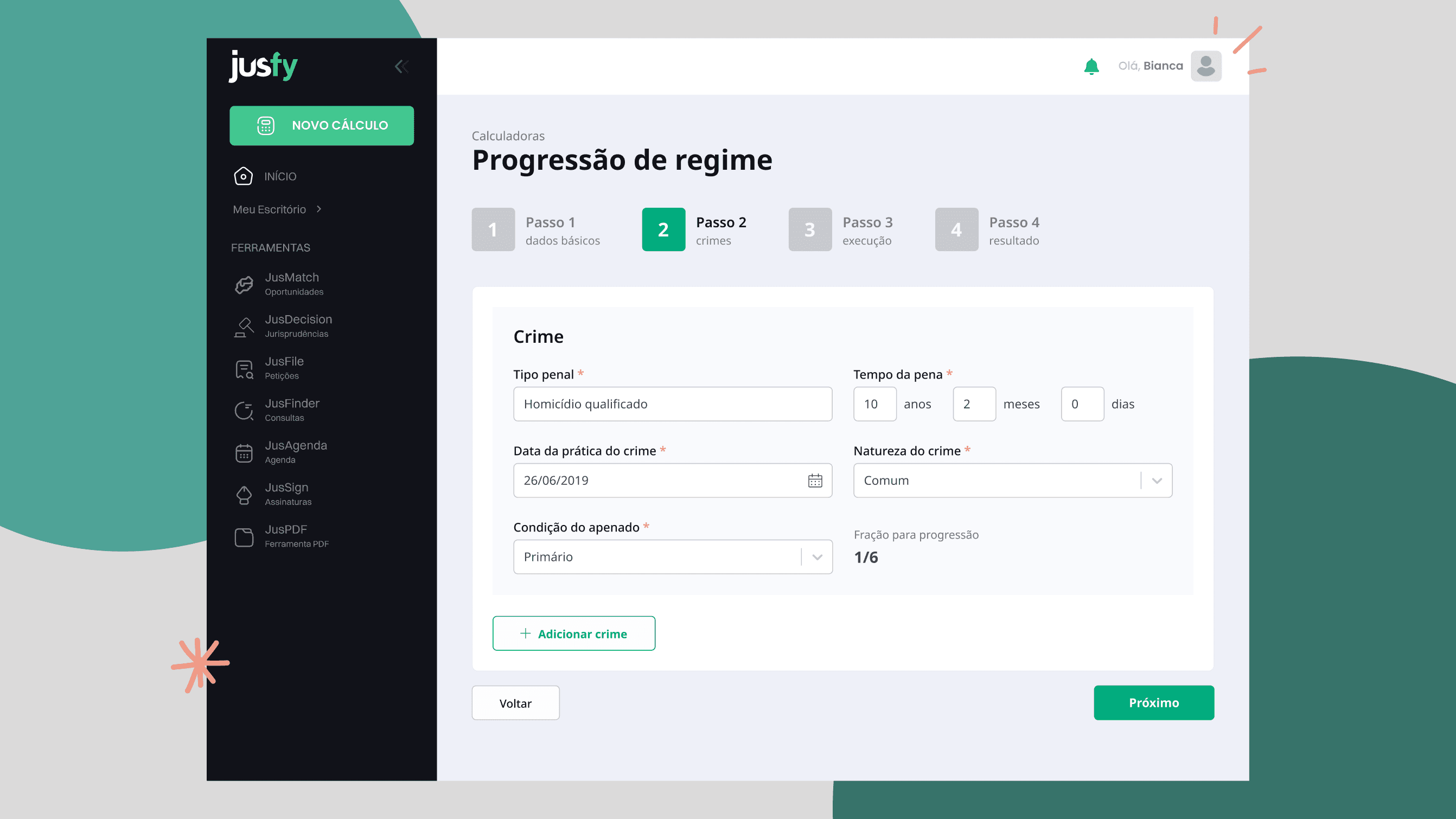
Jusfy is a SaaS startup that helps Brazilian lawyers streamline their day-to-day work. In Q2 2024, we launched the Criminal Sentence Progression Calculator, a tool that helps lawyers calculate a defendant's progression between different penal regimes, as set out in Brazilian law.
The calculator was built to provide precise calculations, since errors in the government's system can lead to unnecessarily extended time served under harsher regimes. The usage cycle worked like this: the lawyer runs the calculation and makes sure their client is treated fairly; the client then refers the lawyer to other inmates they know; and that brings the lawyer more paying clients and cases to calculate.
After launching the first version, we analyzed customer feedback
I led both the calculator's MVP and the improvements presented in this case study. In this new phase, we analyzed data collected during Discovery (research with Criminal Law specialists, qualitative and quantitative studies with customers, and usability tests), Mixpanel usage metrics, Microsoft Clarity session recordings, CSAT feedback, and insights from partner influencers.
We implemented the improvements the calculator needed
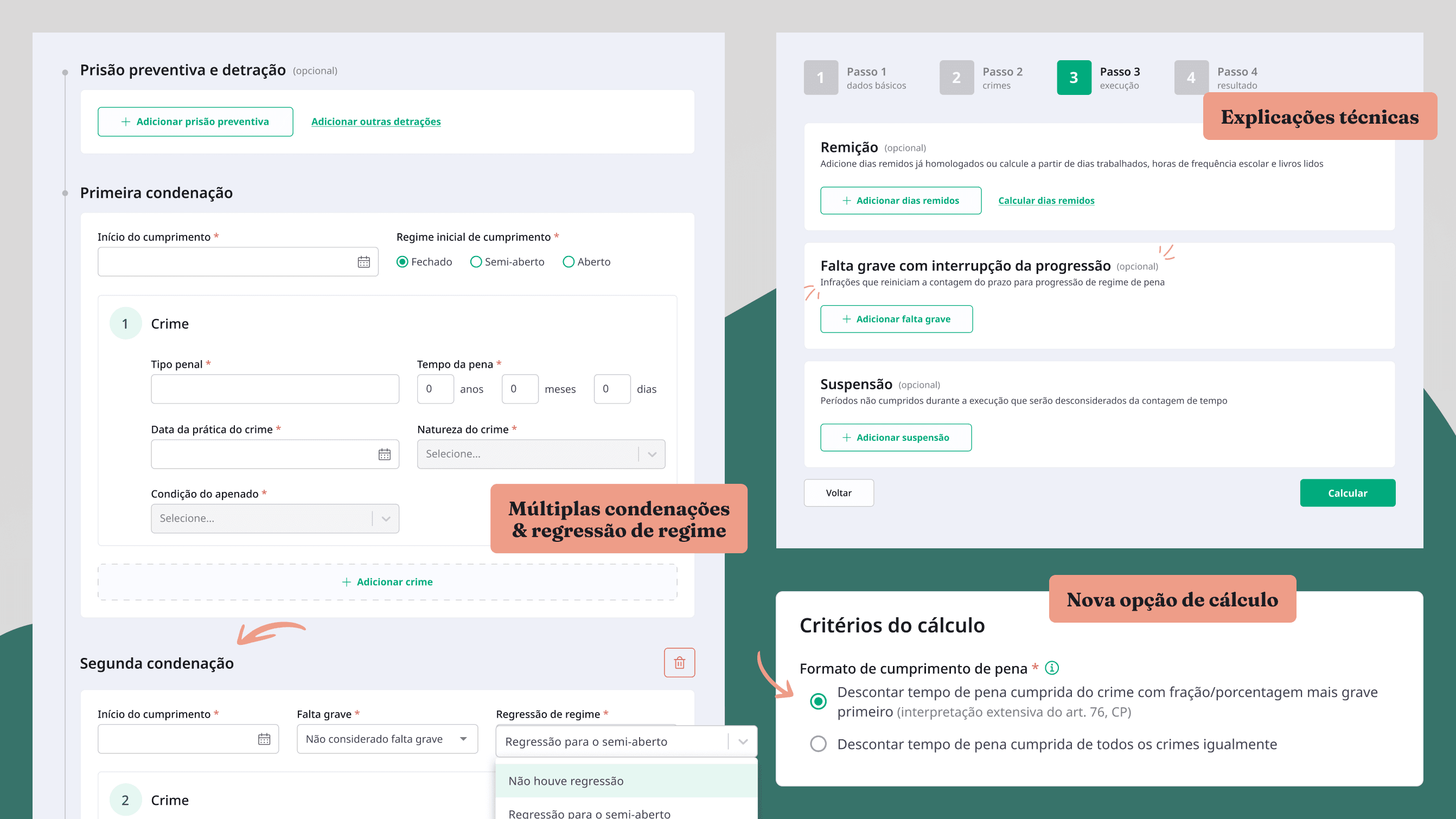
After that analysis, we implemented the following improvements: expanded functionality to handle multiple convictions and calculate regime progression for people sentenced for several crimes across different cases; a new calculation method, letting users choose the more favorable option where the harshest sentence is served first; usability improvements to the interface; and petition templates, to help lawyers draft their defense arguments.
We increased usage, CSAT, and positive qualitative feedback
From Q2 to Q3 2024, we saw excellent results: the improvements met users' needs, and they came to trust the calculator more. Usage grew 310%, CSAT rose from 75 to 92, and we received feedback like "Practical and easy to use," "Very easy to understand and calculate," and "Simply wonderful."
We also covered more criminal cases: various government data sources show criminal recidivism ranging between 32% and 70% of cases, so it was necessary to account for that possibility in the calculator to reach a higher quality standard.
Next steps
Building on what we learned from this calculator, we're moving on to create other criminal calculators, in order to win over more lawyers in this field and reduce churn within this group.
We also continue monitoring usage and customer feedback, which has proven very valuable in letting us act proactively.