There's a lot of talk about building personas from real data, so that important strategic decisions aren't made on guesswork. In the company's early days, with a founding partner who had deep experience as a lawyer and a lean team, there wasn't much need to analyze users more deeply.
As the software grew to tens of thousands of users and the team expanded, we began to see more open questions and a growing disconnect in how people understood our audience. Combined with increasingly ambitious goals, this earned us senior leadership's sponsorship to run this research.
First, we ran workshops with the Marketing and Support/CX teams to understand which metrics they wanted the personas to move, and what questions they had about our customers. From there, I was able to plan a sequence of studies in different formats, each suited to a set of questions.
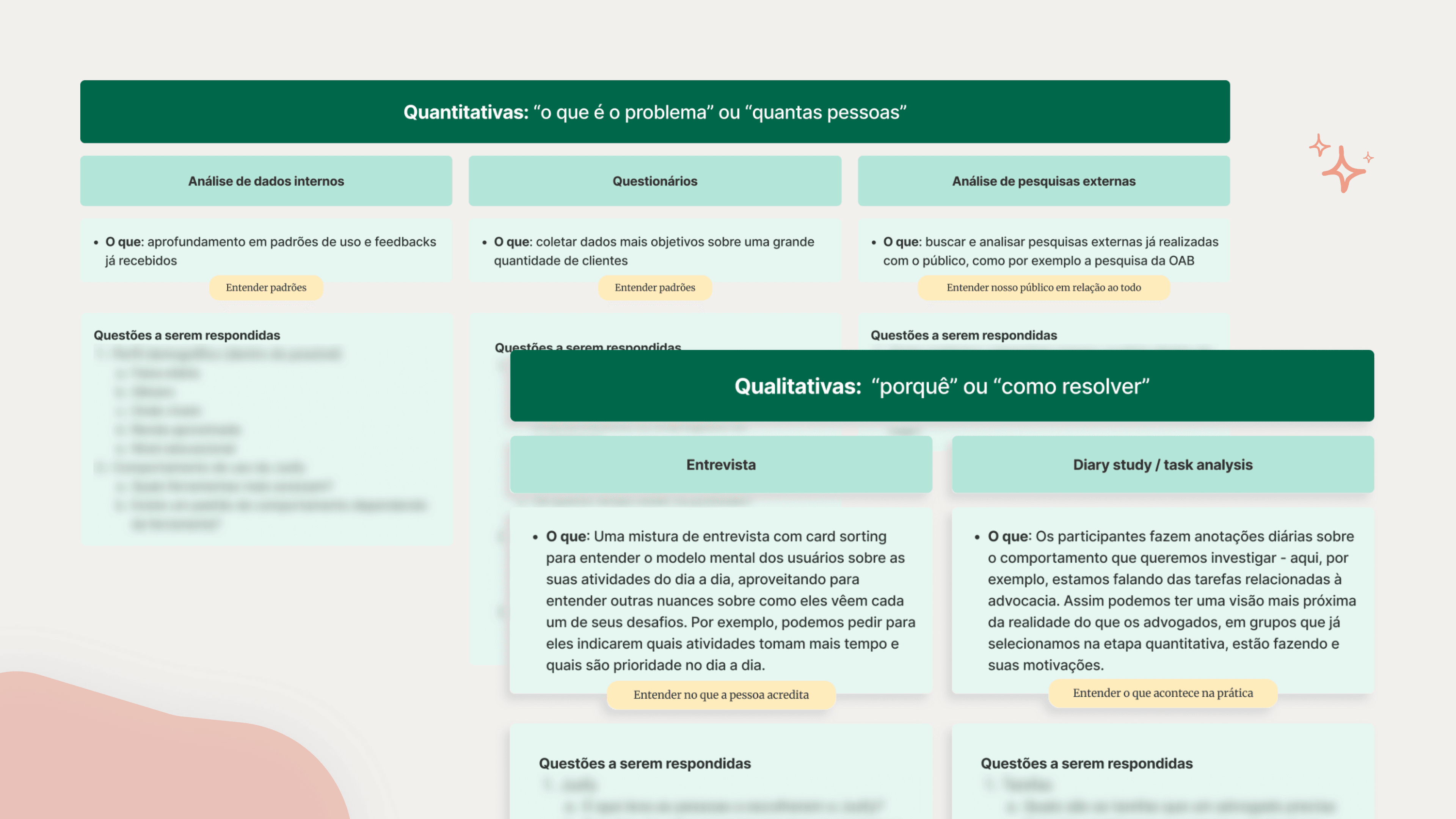
An accurate picture of our users with quantitative data
We combined three quantitative approaches: internal data, to understand demographics and dig into usage patterns; short surveys, to collect more objective data on professional context and technology use (a previous survey in the same format reached 22,000 users, with a 9% response rate); and external research, to analyze the state of the legal profession in Brazil.
Because the dataset was large and scattered across many disconnected tables, we used Julius AI to merge and analyze it — cutting down what could have taken weeks without specialist support to a fraction of the time.
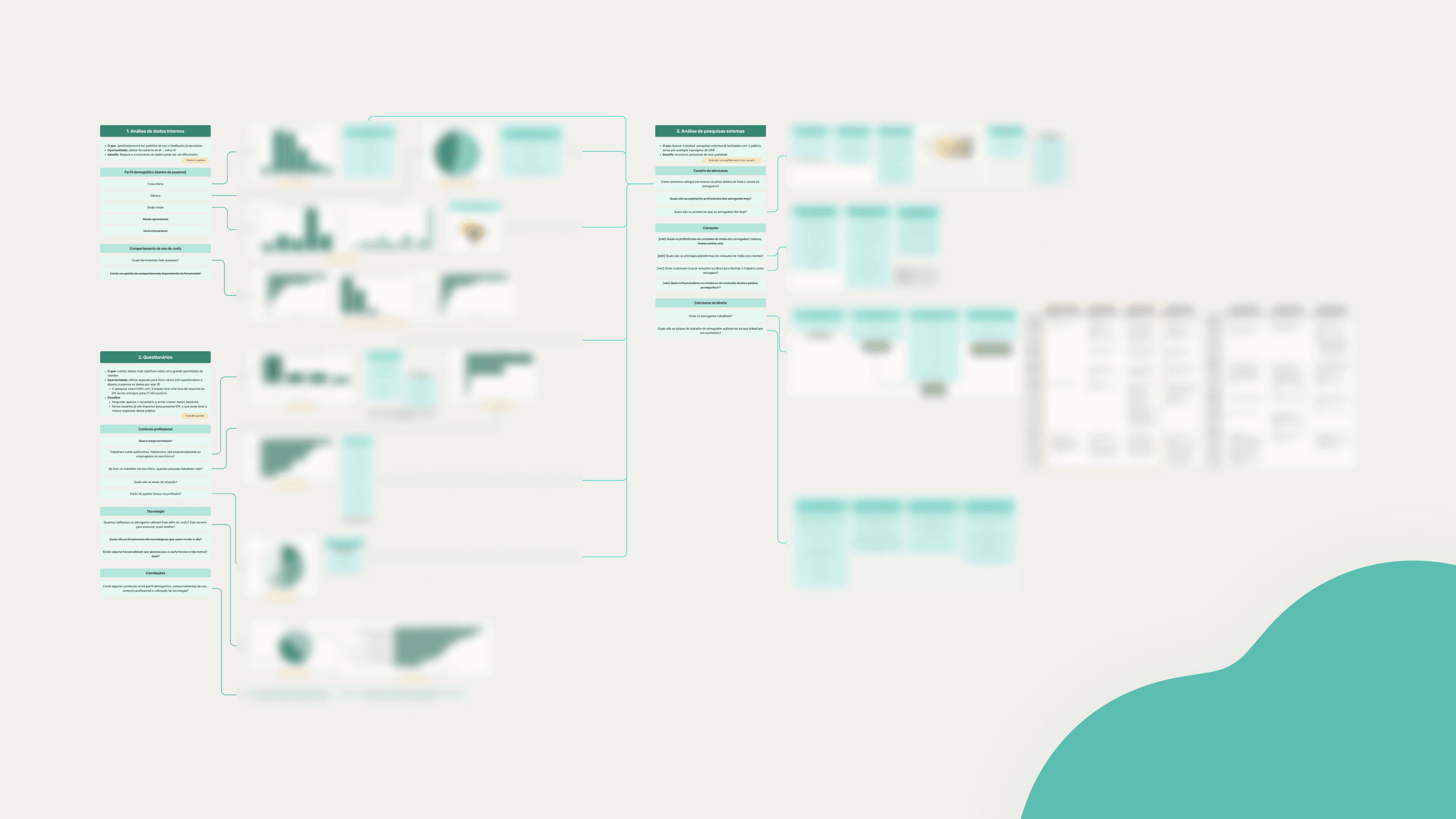
We couldn't find data to answer every question we had mapped out; but since we understood the personas would be a living document with frequent additions, that didn't worry us.
Goals and pain points were key to classifying the personas
Of everything, the qualitative research changed the most compared to the initial plan. We chose a leaner interview format to maximize participation and dropped the diary study, since we wouldn't have time for such a demanding research method.
For the interviews, we put together a task force within the Design team. I structured the script, ran recruitment, and organized standardized documentation so every designer could take part interviewing. Together, we conducted and documented 13 customers interviews.
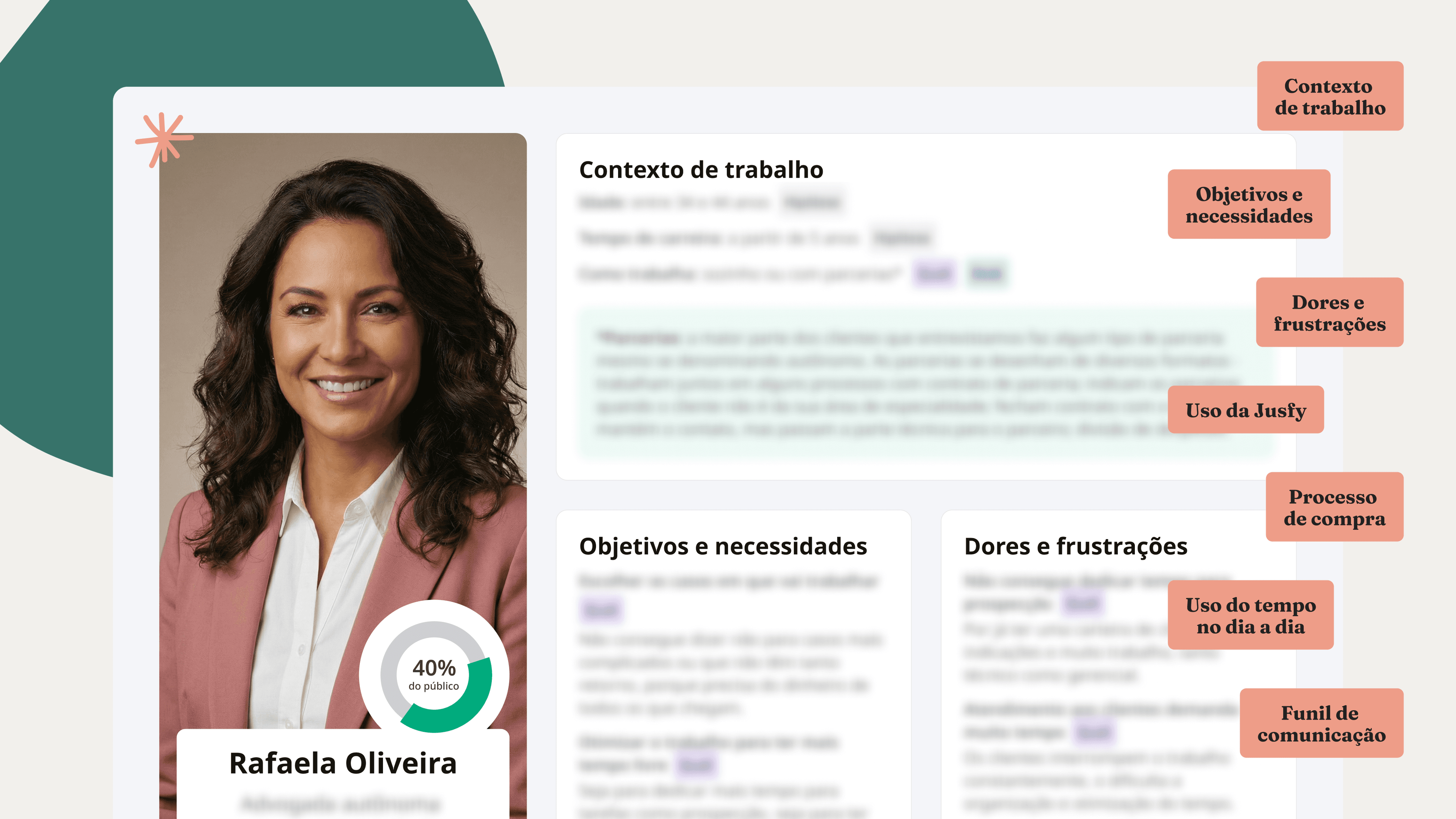
From there, we ran a language analysis to understand how customers referred to features — which shaped decisions in the new menu's information architecture — and grouped the responses into 4 persona profiles. We found a clear correlation between the challenges each profile faced, going beyond the usual basic split between solo lawyers or small, medium, and large firms (in Brazil).
Classifying the profiles by the challenges they face — instead of the size of their law firm — made it possible to build a clearer, easier-to-understand view of how our product can help each of these personas.
Aligning the team and running annual planning
We created a profile sheet for each persona with all the research findings, making explicit which data came from the quantitative side, the qualitative side, or was just a hypothesis. To drive more engagement with the personas across the company, I built a navigable prototype — more pleasant to explore than a plain document — and we prepared a presentation with a quiz-style game.
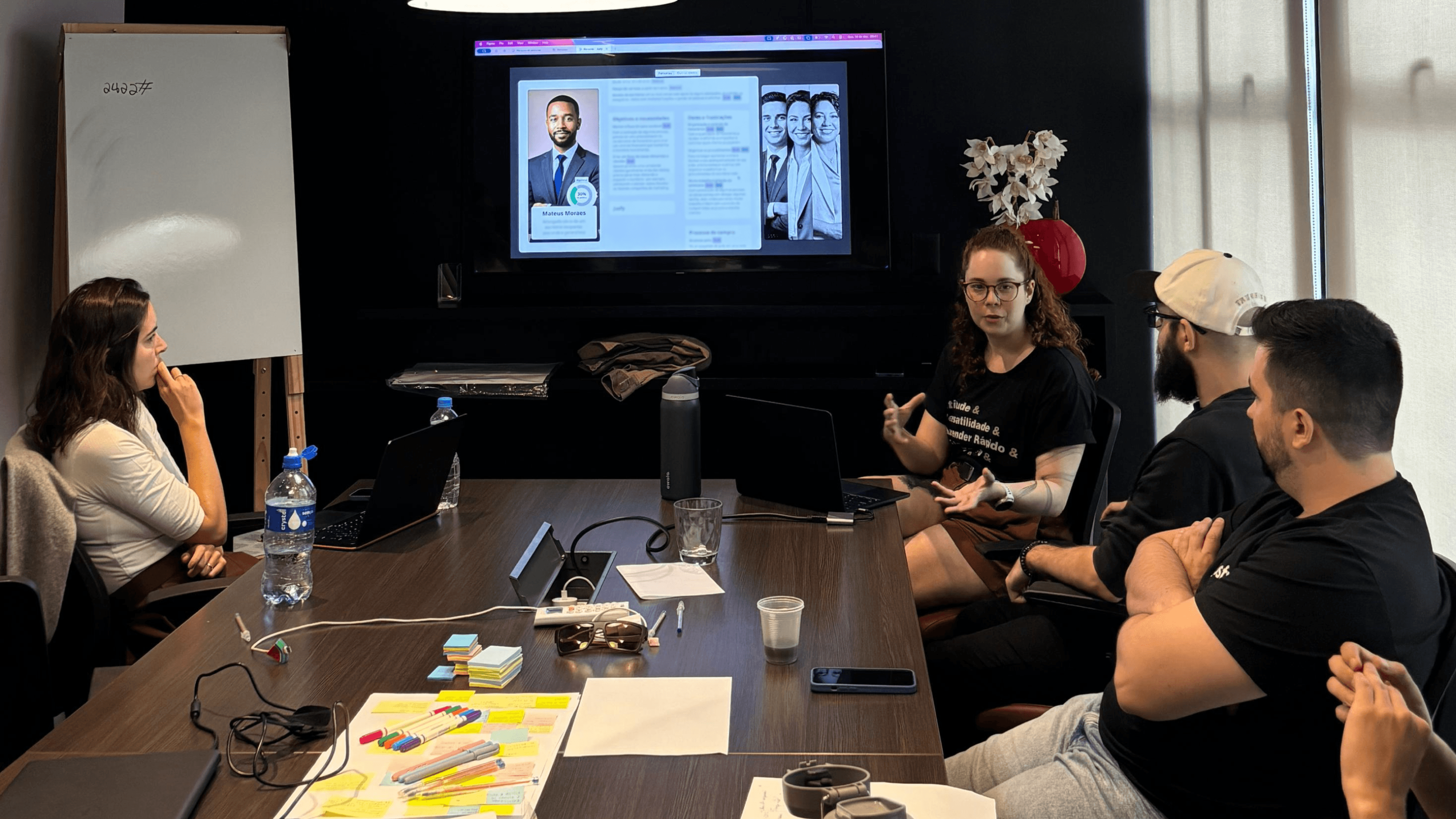
Team engagement was higher than expected, with people actively taking part in the quiz during the presentation and referencing the personas in meetings for weeks afterward. Together with the head of product, I also prepared an exercise for the Product and Design teams to reflect on annual planning and roadmap packaging using the personas.
Next steps
The personas are a living document, which will be updated as new data is analyzed by teams across the company.
We also created documentation on how to classify the user base into the profiles found in the research, and will follow up on this with the new Data team — which will bring real-time usage data per profile, enabling better analysis and personalized customer journeys.
We also plan to work with the People team to track perceptions of new-hire onboarding, understanding qualitatively whether the personas helped reduce ramp-up time.